Lightning Bolt Is From Egyptian Historical Wall Art Mytholog
Symbolic and replete with timeless inspiration, an fauna appears in all man cultures and takes endless forms.
And this prayer of the vocaliser,
continually expanding,
materialized in a cow that had been there before,
the beginning of this earth.
—Rig Veda, 10:31
Since fourth dimension immemorial, the shut relationship betwixt people and animals has produced such a deep bond that they've been an essential part of our beliefs, mythologies, and legends. Our fantastic, ontological explanation of the world is populated with animals, and many of our deities are embodied by them. From insects to ferocious beasts, all kinds of creatures have been included in our mythological mind. One of these beings holds a special identify, the cow.
Cattle were among the first animals domesticated by humankind. Information technology took place some 10,000 years ago. In many human cultures, cows symbolize fertility, generosity, motherhood, the origins of life, and they're related to tranquillity. Cows, and their male counterparts, are recurring presences inside mythologies and ancient religions. The moo-cow is an animal, yes, only it'south likewise a powerful symbol, myth, and metaphor.
The mystical, mythological, symbolic graphic symbol attributed to cattle has been a starting bespeak and a central theme in artistic works over the entire course of history. They illustrate and contextualize humanity'southward nigh varied beliefs and views. The cow is a protagonist and companion in the visual narrative of our existence, appearing inevitably at every moment of fine art history, from cave paintings, to practices in our own contemporary historic period.
For all these reasons, cows have figured, in multiple forms and means, in the arts equally the bearers of manifold and fascinating meanings.
The Dancing Cow
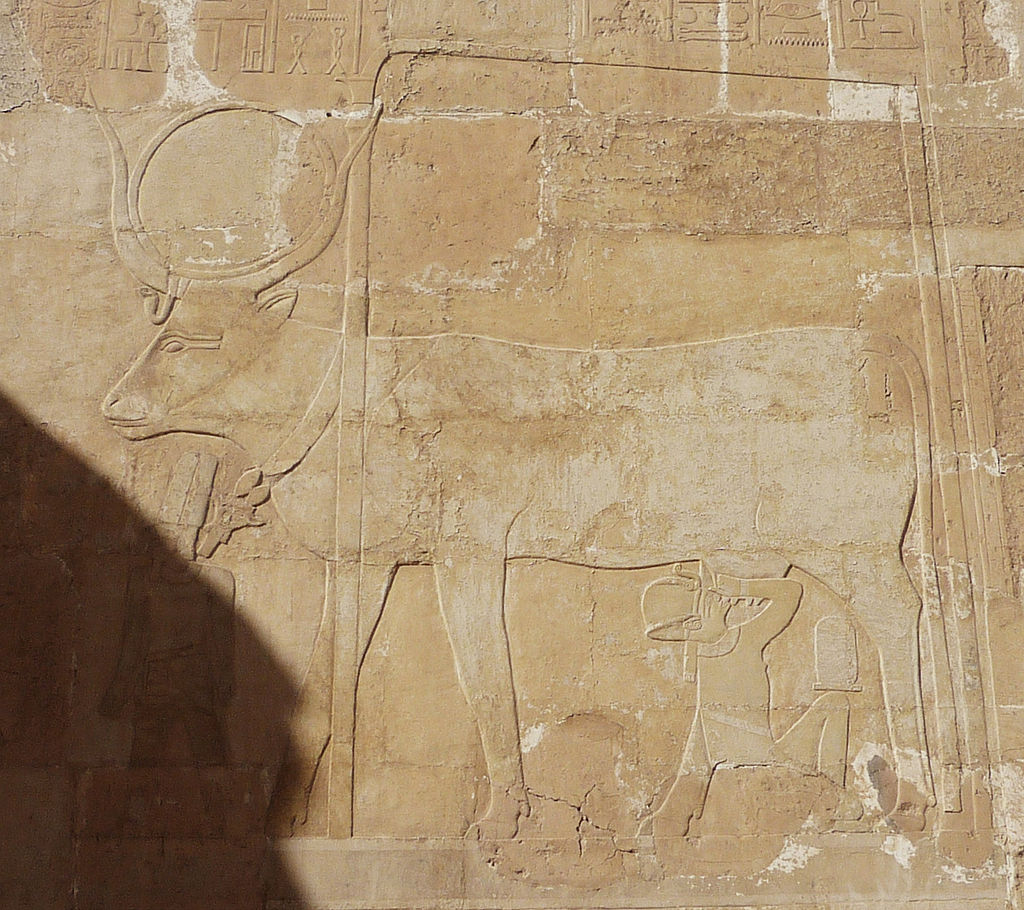
Hathor was a goddess of love, joy, and dancing in Egyptian mythology. Originally a representation of the Milky Way, she was literally, milk flowing from the udders of a celestial cow. It's due to her that nosotros call our own galaxy every bit we do. Later, she was depicted as a woman with moo-cow horns, and every bit a cow between whose horns is a solar disc. In ancient Arab republic of egypt, cattle were symbols of fertility. It was as well believed that the fluctuating level of the Nile River depended on them.
The Rectangular Cow
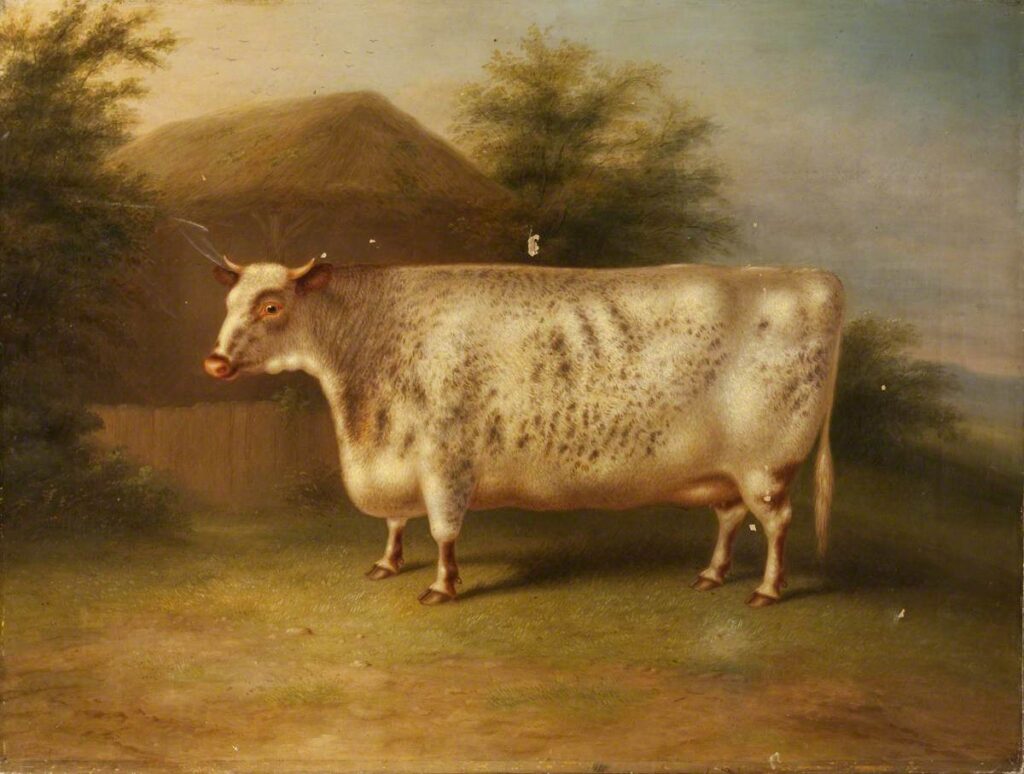
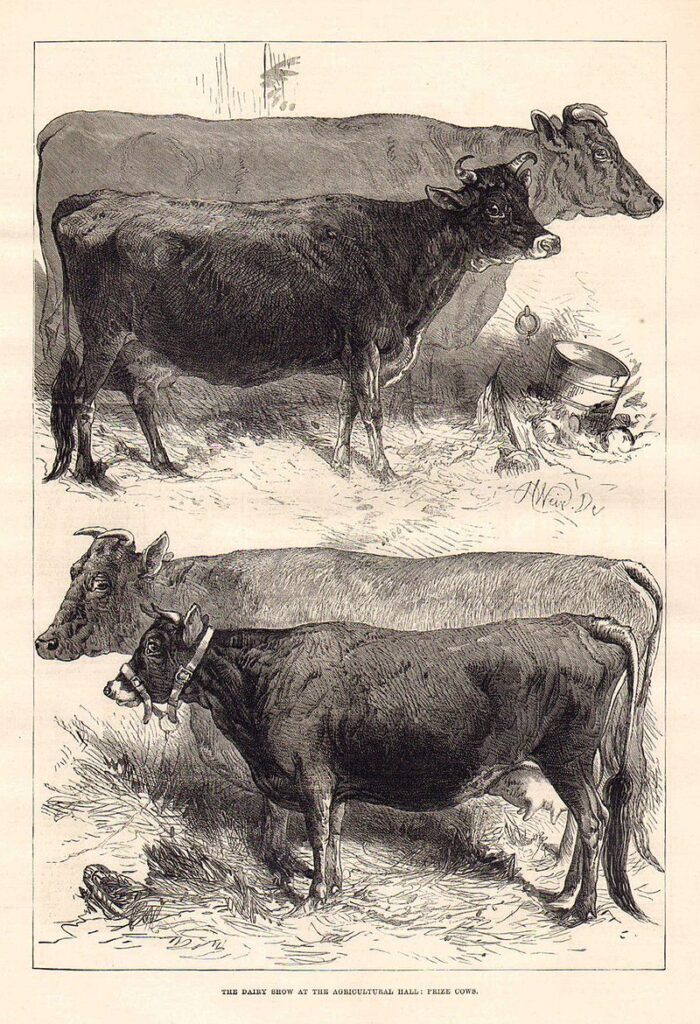
In 18th-century England, paintings of "rectangular cows" became commonplace. They were cattle caricatured within realistic scenes, with heads, legs, and tails of a noticeably lower proportion in relation to the residuum of the body. That was exaggerated, muscular, and bulky. The mode of representation was continued directly to the Agricultural Revolution. It was a fourth dimension of remarkable development, and rural production, and one in which cows played a leading part. Technological advances allowed, for the first time, for selective, specific convenance in livestock. A common practice among powerful breeders was to commission local artists to produce pictorial portraits of the animals—a proud record of their successful rearing and a symbol of the breed's power.
Cows of the Sun
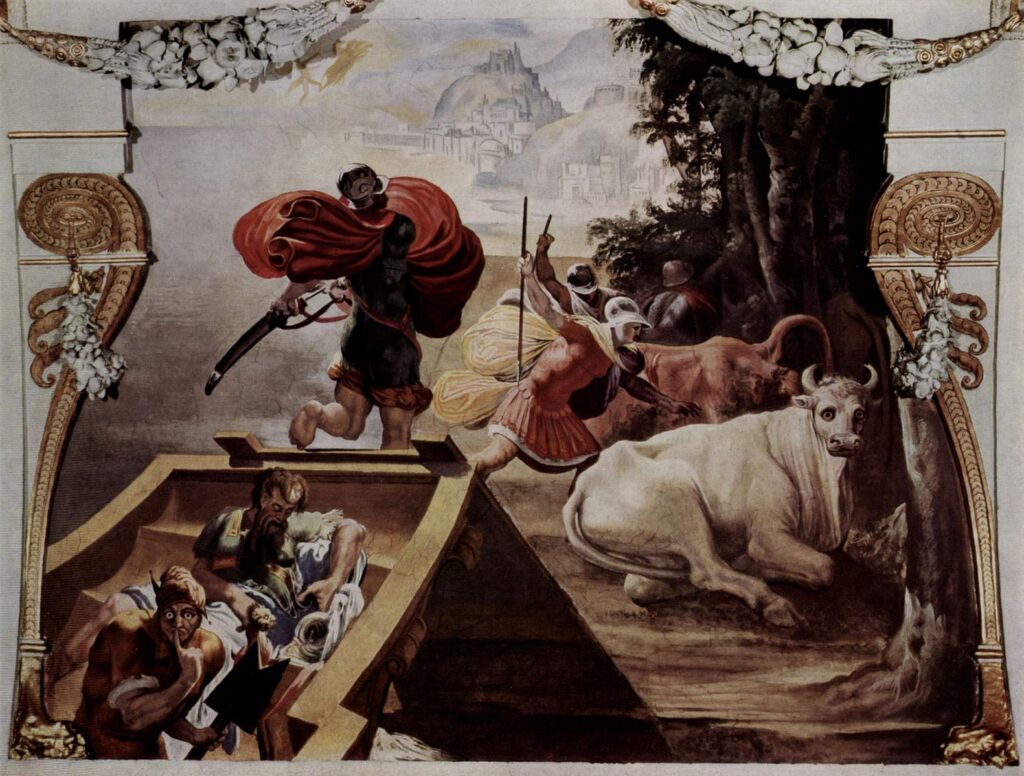
In literature, cattle have been recurrent and fulfilling. Varying past author and context, cows perform multiple narrative functions. In The Odyssey, Homer describes Ulysses' fellow travelers' decision to cede and consume the forbidden cows of Helios, the god of the sun. In response to the disrespect, Zeus casts a lightning bolt which destroyed the transport killing everyone on lath except Ulysses.
The Bang-up Cosmic Cow
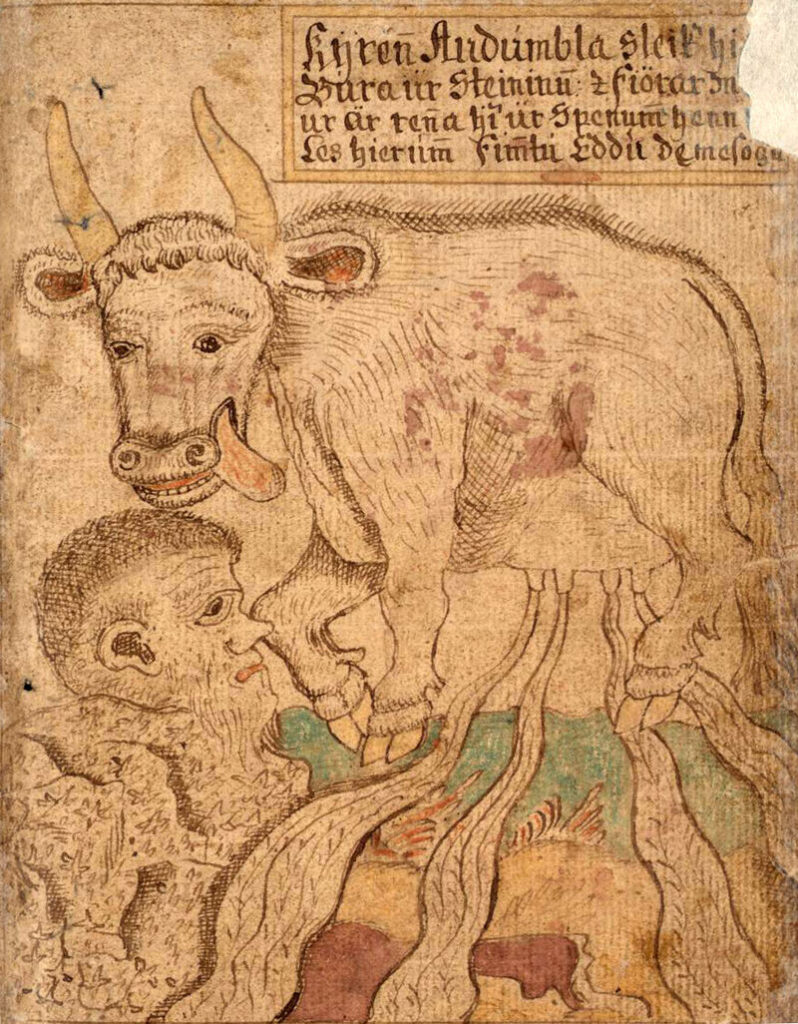
In Norse mythology, the kickoff living beingness, the ane from which all the rest sally, was a giant named Ymir. A colossal beingness, he fed on the milk he drank from some other primal being: Aðumbala, the great cosmic moo-cow—a bovine that arose from the water ice of Niflheim (a kingdom of darkness and obscurity and a kingdom of dragons). The cow fed on salty pieces of frost melted past the Muspelheim (a kingdom of fire and home to giants). In licking the ice, Aðumbala revealed the effigy of a man, and cheers to the cow'southward natural language, eventually released him. This man was Buri, the starting time god of Norse mythology.
A Moo-cow Called Serpentina
A serial of unfortunate events happened to a rural Mexican family. The story begins with La Serpentina, a cow "with one white ear, and another colored, and very beautiful eyes." She disappears when dragged downward the river. The event, as though it were a bad omen, expresses the symbolism of the animals in Mexico. The cow here functions as a common thread running through a moving tale entitled, "We're only very poor," collected in Juan Rulfo'southward The Called-for Plain.
The World of Cows

In India since aboriginal times, cows have been considered sacred animals. Krishna, the eighth incarnation of the god Vishnu, is said to have grown up within a herd of cows. This made him the guardian and protector of cows. (It'south also why, according to a vision, the world is full of them.) Krishna lived in a land of plenty, of wealth, and natural beauty. In Sanskrit, the place was called Goloka, which means "world of cows." The unique relationship with the effigy of the cow has remained, among Indians, practically intact even to this solar day. Much of the population of India considers them a sacred fauna and will not kill or eat them. On the other paw, in the oldest Indian sacred text, the Rig-Veda, the presence of cattle constantly reappears within the Sanskrit hymns dedicated to the gods. In these texts they refer to the cow every bit aghnya. An gauge translation is "that which cannot be sacrificed."
La Vaca Independiente

A key character in the history of Mexican graphics was Abel Quezada. A multifaceted artist, through his caricatures, paintings, and texts, he portrayed and criticized the complex and fascinating reality of Mexico. Quezada began as a self-taught painter at an advanced historic period. His pictorial work, mainly focused on portraiture and landscape, is characterized past a simplicity of stroke and a dazzling utilize of color. A piddling-known but unique work by the Monterrey-based artist was La Vaca Independiente, i.due east., The Independent Cow (1979). In oil on a very big sail, the painting depicts a cow in profile. In lite shades of dark-brown, yellow, and white, the cow stands on a night floor earlier a neutral background. The moo-cow looks to the viewer's left, contemplative, tender, surprised, and solitary. At the far right of the composition is an artifact, a blue and red rotating cylinder, such as those once used to identify barbershops. The painting holds an enigmatic beauty, near cool, and seemingly naïve. It invites one to decipher the messages traced into information technology. Quezada'due south work, and specially this work of fine art, served every bit inspiration and as a trigger for the cultural dissemination project, La Vaca Independiente.
campbellpothead67.blogspot.com
Source: https://lavacaindependiente.com/en/cows-in-art-mythology-culture-la-vaca-independiente/
0 Response to "Lightning Bolt Is From Egyptian Historical Wall Art Mytholog"
Enviar um comentário